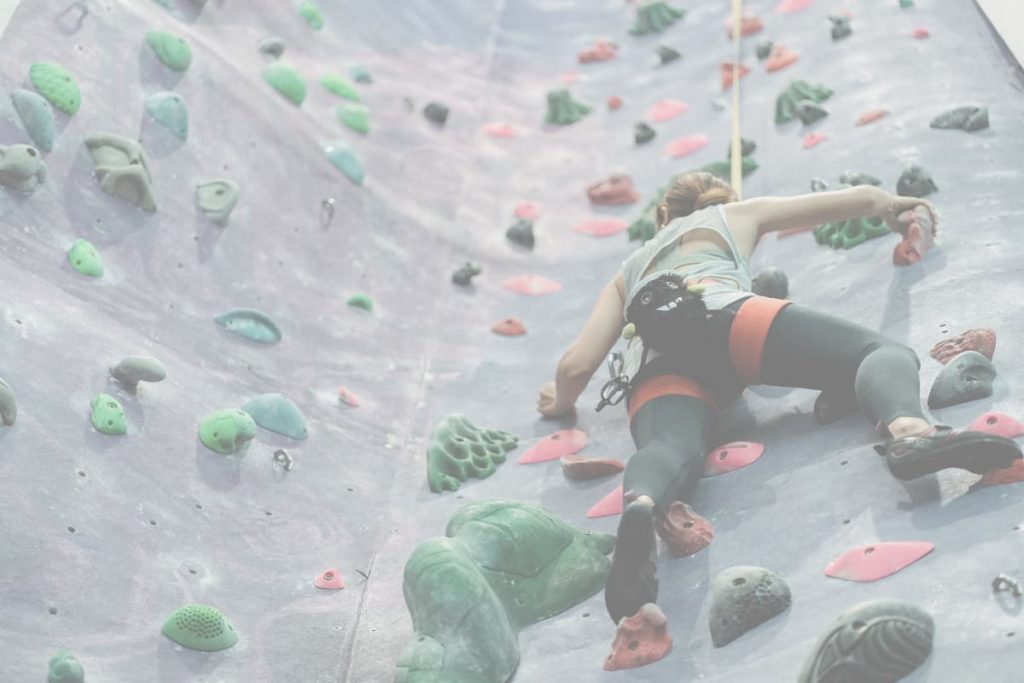

Last weekend, we went indoor rock climbing for the first time in a long while. Years ago, when I lived in California, I climbed regularly. I wasn’t an expert by any means, but I felt comfortable enough on the wall. Back then, I always climbed with a partner. There was another human being on the ground holding the rope, paying attention, and keeping me safe.
This time was different. The climbing gym used an auto-belay system, a mechanical device attached to the wall that catches you when you fall and lowers you gently to the ground. Simple enough, right? Apparently not for my nervous system.
The wall wasn’t even particularly tall. Rationally, I understood that the equipment was designed for exactly this purpose. Hundreds of people use these systems every day. The technology has been tested, inspected, and trusted by countless climbers. (Or at least I hope it was :)) Yet when I reached the top for the first time, my entire body froze. All I had to do was lean back and let go, but I couldn’t. Instead, I carefully climbed all the way back down. Then I tried again. Same thing. And again. My hands were shaking. My legs were shaking. My brain was listing all the possible ways this climb (and fall) could go wrong.
What if the equipment failed? What if something snapped? What if I fell? So, I kept doing what felt safer: controlling the descent myself. After a few attempts, I decided to try something different. Instead of climbing all the way up, I climbed only a few feet and let go. The equipment worked. Then I climbed a little higher and let go again. Still worked. A little higher. I was still ok. I was slowly gathering evidence that maybe, just maybe, I could trust what was holding me. Eventually, I climbed all the way to the top. My heart was racing. My hands were sweating. Every instinct told me to climb back down, but climbing back takes a lot of energy. This time I leaned into the harness. And I let go. As you can probably guess, since you’re reading this blog post, the equipment did not fail. I floated gently back to the ground.
The funny thing is, I wasn’t the only one. I noticed several adults doing exactly the same thing. They would climb all the way up, look down, panic, and carefully climb back down instead of trusting the system. Meanwhile, the kids? They were practically flying. They reached the top and launched themselves off the wall with complete confidence. No hesitation, no overthinking, and no need to control every step. Just trust. Pure TRUST. And standing there watching them, I couldn’t help but think about life.
We Want the Outcome Without Letting Go
Most of us are willing to climb. We’ll take courses, read books, go to therapy, start businesses, work on ourselves, set goals, and create vision boards. The list of to-dos is endless.
We are often willing to do the hard part. What we struggle with is letting go. We want guarantees, certainty. We want to know exactly how things will unfold. We want to know when the opportunity will arrive, how much money we’ll make, when healing will happen, how our children will turn out, or what step comes after the next one. We want to climb while still controlling the rope. But life doesn’t work that way. At some point, there is always a moment where we have to lean back and trust. Not blindly, not recklessly, but trust, nonetheless.
Faith Is Not the Absence of Action
Sometimes people misunderstand surrender. They think it means sitting on the couch and hoping God, the Universe, delivers everything to their doorstep. That’s not what I’m talking about. I believe deeply in taking action. Set the goal. Take the course. Have the difficult conversation. Send the application. Start the business. Go to therapy. Climb the wall.
Do your part.
But after you’ve done your part, there comes a moment when trying to force the outcome creates more suffering than peace. That’s where surrender begins. It’s the wisdom of doing everything you can and then releasing your grip on how it must happen. The Lord’s Prayer contains a line many of us have heard countless times:
“Thy kingdom come, thy will be done, on earth as it is in heaven.”
Whether you call it God, the Universe, Life, Source, or something else entirely, there is a profound invitation in those words.
An invitation to participate fully while recognizing that we are not in charge of every detail. An invitation to act without needing to control.
The Illusion of Control
The truth is, control often makes us feel safer than we actually are. I felt safer climbing down the wall. But was I really? The auto-belay system was specifically designed to keep me safe. My fear wasn’t protecting me. It was preventing me from experiencing what happened when I trusted. How often do we do the same thing in our lives? We stay in jobs that no longer fit because they’re familiar. We avoid opportunities because they’re uncertain. We overthink decisions because we’re afraid of making the wrong choice. We grip tightly to plans that life is trying to outgrow. Not because it’s truly safer. Because it feels safer. There is a difference.
Trust Is Built One Small Let-Go at a Time
What helped me wasn’t forcing myself to jump from the top immediately. It was taking small steps. A few feet. Then a little higher, then a little higher. Trust grew through experience. Life often works the same way. You don’t need to leap from the top of the wall on day one. Sometimes you simply need to loosen your grip a little. Take one step. Try one new thing. Release one old belief. Allow one opportunity and trust one small next step. And then another. Eventually, you discover that what has been holding you all along is stronger than you imagined.
What If the Rope Holds?
That day, the hardest part wasn’t climbing. It was allowing myself to be supported. And perhaps that’s true for many of us. Maybe the invitation isn’t to work harder. Maybe it isn’t to control more. Maybe it isn’t to figure everything out before taking the next step.
Maybe the invitation is simply this:
Do your part. Climb the wall. Take the action. Set the intention. Then lean back, and TRUST.
Because sometimes the life we’re longing for begins the moment we stop trying to climb down and finally allow ourselves to let go.